Rotating Home Care Bed Turns Lying to Sitting in One Move
Rotating Home Care Bed Turns Lying to Sitting in One Move
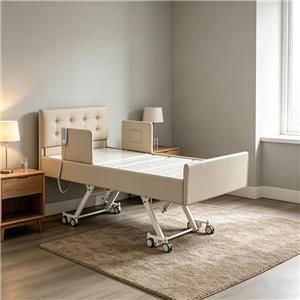
AHC-HE316-5 is a 3-function electric nursing bed for elderly care, combining three electric adjustments, a 90 degree rotating bed body and an upholstered home-care design so daily care and seated transfer stay manageable for families and care staff.
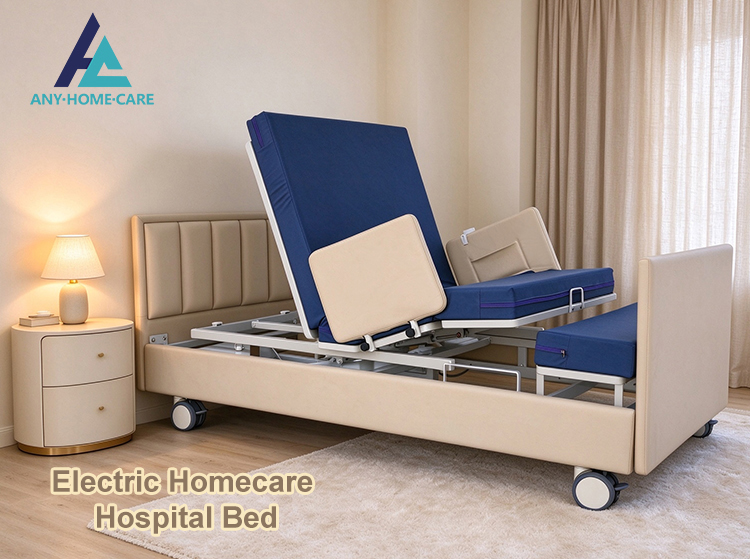
Figure 1. AHC-HE316-5 rotating home care bed in a residential care setting.
A Care Bed Is Judged at the Mattress Edge, Not in the Middle
Ask a family what changed after a care bed arrived and the answer is rarely about sleep. It is about the ninety seconds between the mattress and the chair. That is where the belt goes on, where someone is asked to put an arm round a neck, where a slide sheet is pulled straight for the fourth time that morning. For a single carer looking after a parent, the same ninety seconds repeat five to eight times a day.
Most electric beds answer a different question. They make the sleeping surface more comfortable by raising the back and the knees, and they leave the person facing the same direction as before. The transfer still has to be organised by hand. A rotating home care bed takes the last part of that sequence — the turn to face outward — and puts it on the handset as well.
The number that decides whether a care bed works is not how flat it lies. It is how many decisions the carer has to make once the person is sitting.
One Press, Three Movements: What Actually Happens at the Bedside
The sequence below is the whole product. Everything else on this page is detail around it.
Secure the bed. All four casters are locked individually before anything moves. A bed that rolls during a transfer is the most avoidable accident in home care.
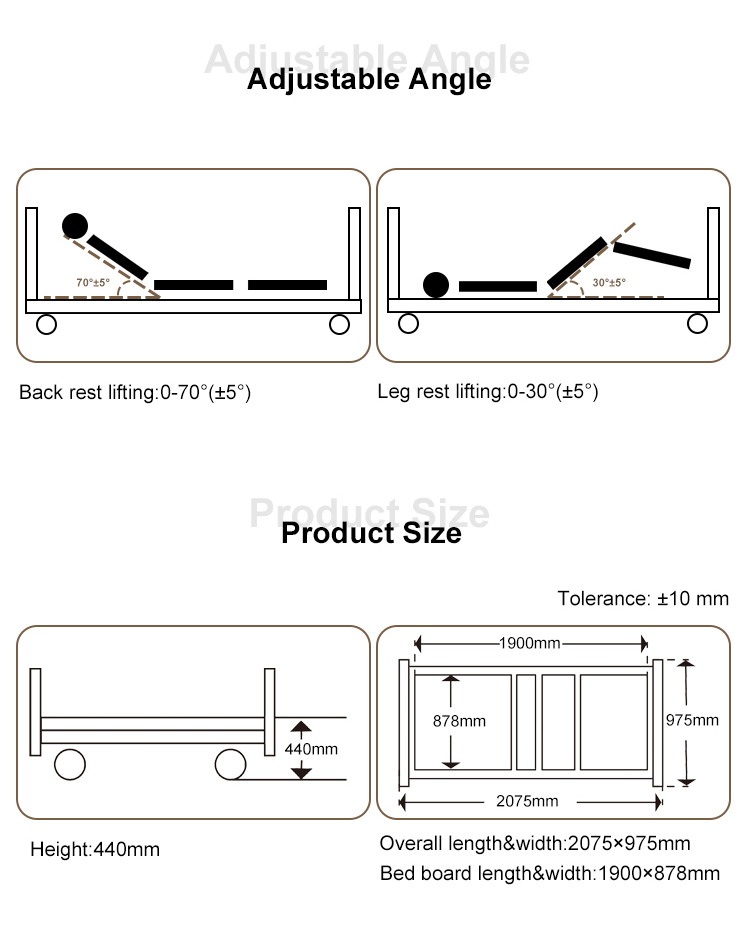
Backrest to 0–70° (±5°). The occupant goes from lying to reclined, which is the point where most people can start to take their own weight through the elbows.
Leg section to 0–30° (±5°). Raising the knees does two things: it takes pressure off the sacrum and it stops the body sliding down the mattress as the back rises.
Seat rotates 0–90° (±5°). The seating area turns toward the side of the bed, so the person now faces the direction they are about to travel instead of across the mattress.
Feet down, carer supports balance. Because the seat is already facing out, the carer stands in front rather than reaching across. Support becomes balance support rather than weight lifting.
Step four is the one that changes the arithmetic. A standard electric bed stops at step three, and the turn becomes a manual handling task for two people. Here it is a button. The handset also carries a combined key that raises the back and the legs together, which turns three separate instructions into one command — useful when the carer is holding on with one hand. That difference is what separates a rotating nursing bed from a bed that only elevates.
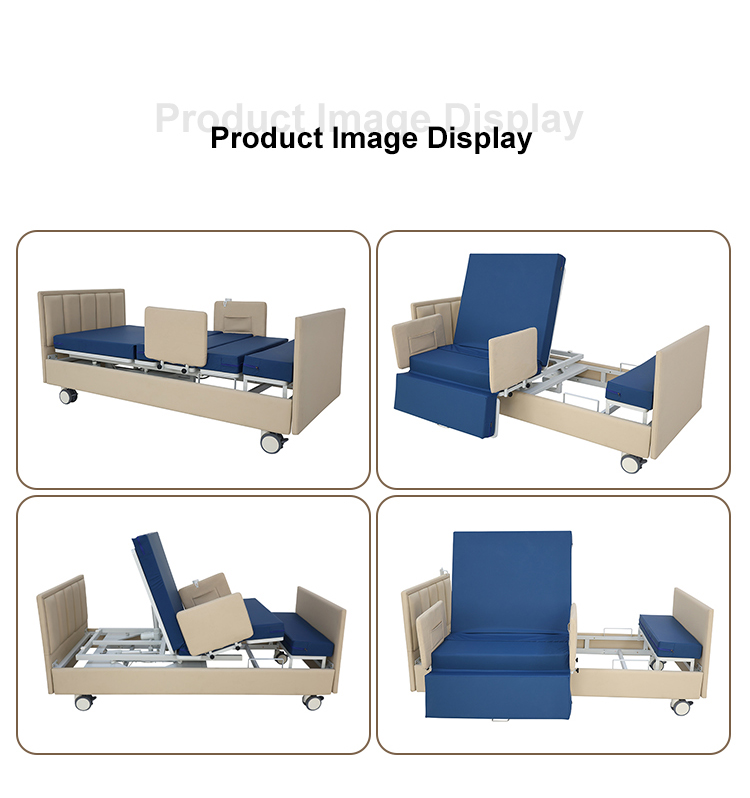
Figure 2. Four positions: flat, backrest raised, back and legs raised together, seat rotated out.
Nothing in the sequence is one-way. Every movement can be stopped mid-travel and reversed, which matters when a user changes their mind halfway, or when the carer wants to check foot placement before going further. That is a small design decision with a large effect on how the bed feels to use at seven in the morning.
Reading the Dimensions Against a Real Room
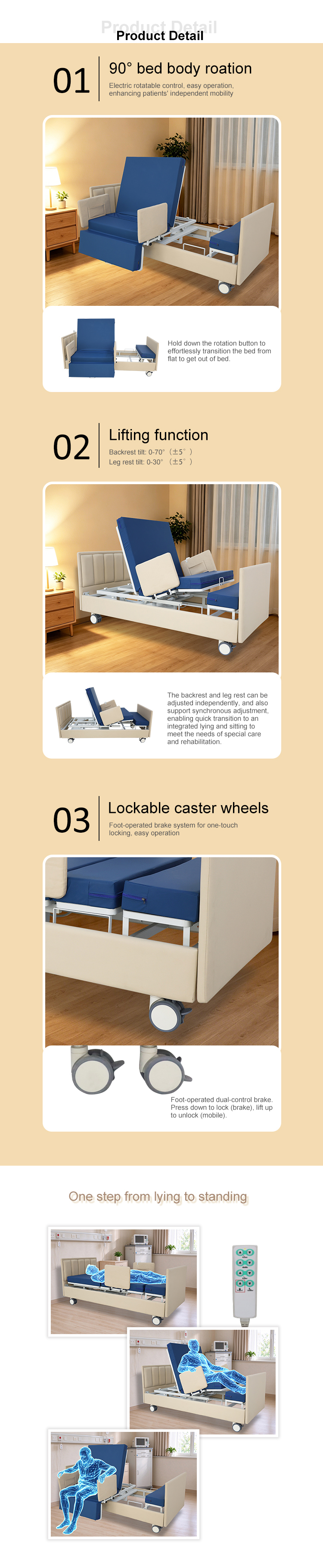
An electric nursing bed for elderly users is bought against a room, not against a catalogue page. The published figures are 2075 × 975 mm overall, a bed platform of 1900 × 878 mm and a fixed platform height of 440 mm. Three of those numbers have practical consequences that are worth checking before an order, not after delivery.
2075 mm long. This is the bed including head and foot boards, so measure the wall it will stand against — skirting boards and radiator valves are the usual surprise.
975 mm wide. The bed does not fold or narrow. A 900 mm door frame will not pass it assembled, so plan room-to-room movement around the widest opening on the route.
440 mm high, fixed. There is no hi-lo column on this model. That height sits in the same range as a domestic armchair, which is what makes standing up from it feel familiar — but it must be checked against the wheelchair, commode or standing frame that will be used next to the bed.
The rotation adds one more measurement that the drawings do not show: clear floor on the side the seat swings toward. Allow the depth of the seat section plus room for the occupant's feet and for a carer to stand in front. This elderly care bed rotates to one side only, so the direction has to be confirmed against the room layout at the enquiry stage — a left-hand rotation in a room that only has space on the right is a return, not a repair.
What This Bed Does Not Do
A page that only lists strengths is harder to trust, and harder to sell to a care home that has been disappointed before. Six limits are worth stating before a quotation goes out.
No height adjustment. 440 mm is the working height. If the care plan needs floor-level work, a standing transfer or a carer working from a low stool, this is the wrong model.
It is not a standing aid. The bed delivers a seated position at the bedside. Standing still needs support, a measured assessment and, usually, a second person nearby.
135 kg maximum patient weight. Confirm against the actual user before ordering, not against the average.
Rotation runs to one side only. The floor on that side must stay clear, including during the night when a chair or a walking frame tends to drift into the gap.
The mattress is an option. The product photographs show one fitted; it has to be specified on the order.
Certification is limited to YY 9706.252-2021. This model does not carry CE, FDA or ISO 13485, so the requirement for a specific market must be confirmed with the sales team before it is quoted to a buyer.
Written down this way, the limits read as a specification rather than a disclaimer — and for an electric nursing bed for elderly users, that is what a care home needs on the table before it signs.
Fitting Out a Room, Not Just Buying a Bed
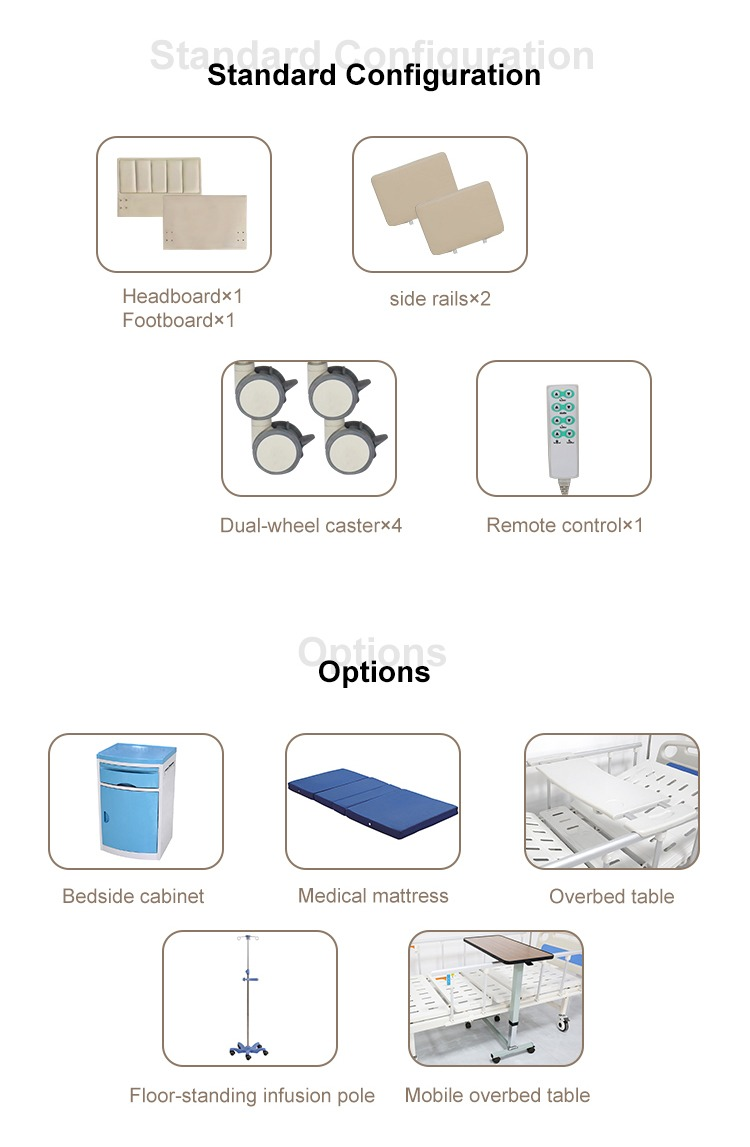
For a distributor or a care-home project, a rotating nursing bed is one line on a room schedule. The accessory list is what turns a bed order into a package: a 190 × 84 × 10 cm medical mattress sized to the platform, a bedside cabinet, an overbed table in fixed or mobile form, and a floor-standing infusion pole. Only the first of those is close to essential — a bed supplied without a mattress will not be usable on arrival.
The practical way to quote is by room rather than by unit. One mattress, one cabinet and one overbed table per bed is a configuration most buyers accept without discussion, and it moves three SKUs instead of one. Where a facility needs to standardise, the accessory set also gives the procurement team a single reference number to repeat across wards or floors, instead of matching items from different suppliers.
Ordering, Packing and Container Arithmetic
Current terms are a minimum order of 30 pieces, an estimated delivery time of 30–35 days, a supply capacity of up to 1,500 sets per month and a reference price of US$715 per set. Final pricing moves with configuration, quantity and destination.
Each unit ships one per carton measuring 2030 × 990 × 550 mm. On that footprint the planning figures are about 16 units per 20GP and 40 per 40HQ. These are working numbers rather than booking numbers — they assume the cartons are stacked without pallets and they should be reconfirmed with the forwarder against the final packing list, because a change of 20 mm in carton height can cost two units per container.
About AHC
AHC-HE316-5 is produced for AHC by a contracted medical-bed manufacturer and supplied under AHC's own model designation, with packaging, accessory configuration and export documentation arranged to the order. Foshan Any Home Care Medical Technology Co., Ltd. supplies electric and manual care beds, hospital chairs and recliners, dialysis chairs, examination couches, rollators, shower and commode chairs, bedside cabinets and overbed tables to buyers in more than 100 countries, and works with distributors and care-facility projects on OEM and ODM terms.
Buyer Questions
1. Can one carer really manage the transfer alone?
The bed removes the lifting, not the supervision. One carer can run the sequence and stand in front to steady the user, which is a different job from holding their weight. Whether that is enough depends on the individual's balance and on the care plan, and it should be assessed rather than assumed.
2. Will it go through a standard doorway?
Not assembled. At 975 mm wide the bed needs an opening wider than that, plus clearance for handling, so most homes will need it carried in as components and assembled in the room.
3. What happens if the motors are used continuously?
They are rated for six minutes of running per hour. Beyond that the thermal protection takes over and the bed stops until it cools — which is normal behaviour, not a fault, but it is worth explaining to a user who expects the bed to run like a lift.
4. Is a mattress included?
No. A 190 × 84 × 10 cm medical mattress is available as an option and should be specified on the order. The photographs show a mattress fitted for presentation.